Public Speaking Journal: A Practical Tool for Effective Communication
The Public Speaking Journal is a structured resource designed to support individuals in refining their public speaking abilities. Whether you're preparing for a presentation, reflecting on past experiences, or tracking progress over time, this journal offers a dedicated space for organizing thoughts, documenting engagements, and evaluating performance. Its practical approach makes it a valuable asset for both novice and experienced speakers looking to improve their communication skills.
What Makes the Public Speaking Journal Unique?
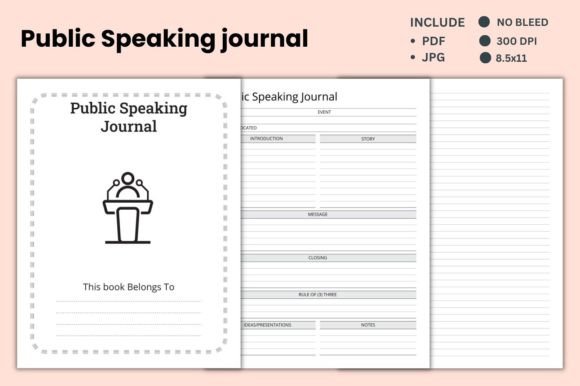
The Public Speaking Journal stands out due to its comprehensive features and user-friendly design. With 120 pages of interior content, it provides ample space for detailed planning, reflection, and record-keeping. The journal includes sections for outlining speeches, noting key points, and assessing delivery effectiveness. This level of organization helps users maintain focus and consistency in their public speaking journey.
One of the journal’s key strengths is its flexibility. Users can adjust the number of pages based on their needs, making it adaptable for different speaking scenarios. The inclusion of high-resolution PDF files ensures that the journal is ready for printing or digital use, offering convenience for various preferences. Its standard size of 8.5” x 11” makes it suitable for both personal use and professional settings.
How Does the Public Speaking Journal Compare to Other Resources?
When considering alternatives, the Public Speaking Journal offers a distinct blend of structure and customization. Unlike generic notebooks or digital apps, this journal provides a physical format that many find more engaging for note-taking and reflection. It also differs from online tools by allowing users to work offline without the need for internet access or software subscriptions.
For those who prefer digital solutions, there are numerous apps and online platforms that offer speech planning, anxiety management, and performance tracking. However, these often lack the tactile experience and long-term storage benefits of a physical journal. The Public Speaking Journal bridges this gap by combining the benefits of a traditional journal with modern usability.
Another consideration is the journal’s focus on reflection and evaluation. While some resources may emphasize preparation alone, the Public Speaking Journal encourages ongoing assessment, helping users identify patterns and areas for improvement. This makes it particularly useful for those looking to track their growth over time.
Strengths and Tradeoffs of the Public Speaking Journal
The Public Speaking Journal excels in providing a structured framework for speech development. Its organized layout allows users to systematically plan, execute, and review their presentations. This can be especially beneficial for individuals who struggle with disorganization or need a clear roadmap for improving their speaking skills.
One tradeoff is the limited customization beyond page count. While the journal is designed to be versatile, users who require highly specific layouts or interactive elements may find it less suitable. Additionally, the physical nature of the journal means it requires storage space and may not be ideal for those who prefer digital note-taking.
Another advantage is its ability to reduce speech anxiety. By providing a dedicated space to document fears, strategies, and progress, the journal can help users build confidence. This aspect is particularly valuable for beginners or those who experience nervousness before speaking engagements.
Best Fit Situations for the Public Speaking Journal
The Public Speaking Journal is well-suited for individuals who value hands-on learning and structured reflection. It is ideal for students, professionals, educators, and anyone involved in regular speaking activities. For example, a teacher preparing a lecture might use the journal to outline key points, while a business professional could track client presentations and evaluate their effectiveness.
It is also a good choice for those who want to develop a habit of consistent practice. By setting aside time to write in the journal after each speaking engagement, users can reinforce learning and identify areas for growth. This habit can lead to measurable improvements in clarity, confidence, and overall performance.
For individuals who prefer visual aids, the journal’s layout allows for the inclusion of diagrams, charts, or notes that can enhance understanding. This feature is particularly useful for those who benefit from visual learning or need to organize complex information effectively.
When Another Option Might Be Better
While the Public Speaking Journal is a strong option, there are situations where alternative resources might be more appropriate. For instance, individuals who rely heavily on technology may prefer digital tools that offer features like voice recording, real-time feedback, or cloud storage. These options can be more convenient for those who need to access their notes from multiple devices or collaborate with others.
Additionally, users who require more specialized content—such as advanced speech techniques, public speaking coaching, or group training—may benefit from other resources. In such cases, the Public Speaking Journal can still serve as a complementary tool but may not replace more targeted solutions.
For those who prefer minimalism, the journal’s 120-page format might feel overwhelming. In these instances, a shorter version or a digital alternative could be more suitable. It’s important to consider personal preferences and workflow when selecting the right resource.
Realistic Examples and Practical Comparisons
Consider a scenario where a university student is preparing for a major presentation. Using the Public Speaking Journal, they can outline their speech, jot down key ideas, and reflect on their delivery after the event. This process helps them refine their approach for future presentations. In contrast, a digital app might allow them to record their practice sessions and receive instant feedback, which could be equally valuable depending on their needs.
Another example involves a corporate trainer who regularly conducts workshops. The Public Speaking Journal can help them track the effectiveness of each session, note participant reactions, and adjust their methods accordingly. Meanwhile, a virtual platform might offer analytics and audience engagement metrics, which could provide additional insights.
Ultimately, the choice between the Public Speaking Journal and other resources depends on individual preferences, goals, and working styles. Both options have their advantages, and the best fit often comes down to how users interact with and benefit from the tools they choose.
Conclusion: Choosing the Right Resource for Your Needs
The Public Speaking Journal is a versatile and practical tool that supports users in developing effective communication skills. Its structured format, flexibility, and focus on reflection make it an excellent choice for those looking to improve their public speaking abilities. However, it is important to consider personal preferences and specific requirements when selecting the right resource.
By understanding the strengths and limitations of the Public Speaking Journal, users can make informed decisions that align with their goals. Whether used independently or in conjunction with other tools, it offers a valuable foundation for continuous improvement in public speaking.